Amazon Restricted Products Policy: Avoid Costly Mistakes

In this guide
The quick answer
Why should you review Amazon's restricted products policy before selling?
Review Amazon's official Restricted Products policy before sourcing inventory because a product may be prohibited, require approval, or need specific compliance documentation. Discovering a restriction after placing a large order can leave you with unsellable stock, removed listings, and potential account consequences. Check the exact product, its claims, and your target marketplace before investing.
One of the most expensive Amazon selling mistakes can happen before you make your first sale. You identify an opportunity, order inventory, arrange shipping, and only then discover that Amazon will not accept the product or your listing as submitted.
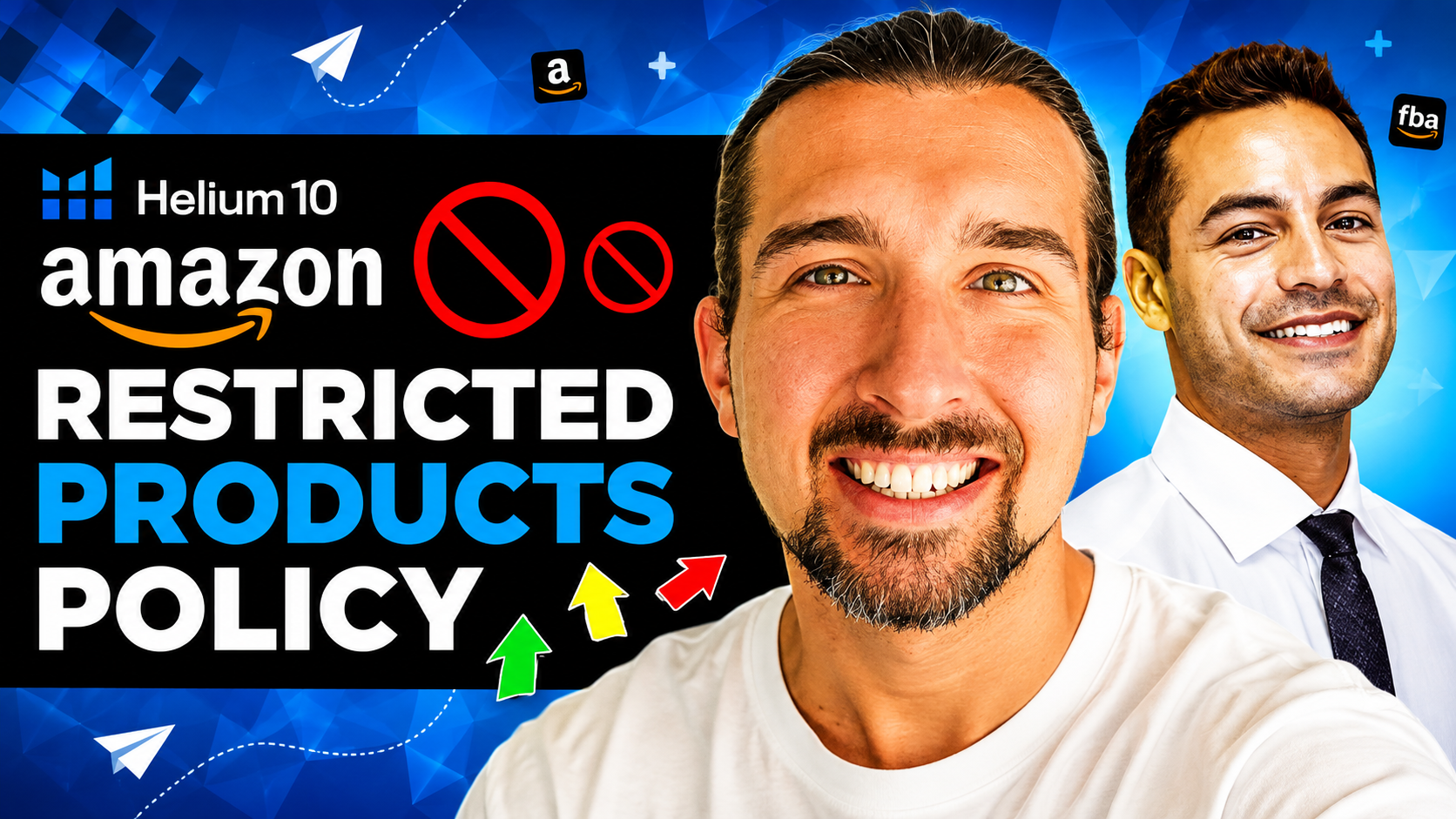
In my conversation with David Miller, an attorney who works with Amazon sellers, we discuss why reading the restricted products rules should be part of product research—not an afterthought. David has seen sellers run into compliance problems after committing significant money to stock.
The practical lesson is simple: demand and profit estimates help you decide whether a product could sell. Compliance research helps you determine whether you can sell it in the first place.
Start with Amazon's own rules
The policy linked here is for Amazon.com in the United States. Requirements for other Amazon stores, shipping programs, and local jurisdictions may differ.
Read the restricted products policyWhat could happen if your Amazon product is restricted?
David gives a deliberately extreme example in the video: even something as ordinary as bottled water could become subject to a new restriction. His point is not that bottled water is generally banned. It is that sellers should not treat today's listing status as a permanent guarantee.
Amazon's published policy describes enforcement that can include removing products, suspending selling privileges, returning or disposing of inventory, and withholding funds in serious cases. The action depends on the violation and circumstances; these outcomes are possibilities, not automatic penalties for every mistake.
Inventory exposure
You may already have paid for products that cannot be listed or fulfilled as planned.
Listing interruption
A removed offer can disrupt sales while you investigate eligibility and submit documents.
Account consequences
Serious or repeated violations may affect broader selling privileges, not just one ASIN.
That is why David urges sellers to check before investing thousands—or potentially much more—in inventory. A few hours of research can be less costly than trying to solve a compliance problem after goods have arrived.
Restricted, approval required, or FBA-ineligible: what's the difference?
These terms are related but not interchangeable. A product can require selling approval even when it is legal to sell. Another product might be eligible for a merchant-fulfilled offer but not for Fulfillment by Amazon. An outright prohibited item is a different situation again.
| Status | What to check |
|---|---|
| Restricted or prohibited | Does Amazon permit this specific product, intended use, and listing claim at all? |
| Approval required | Do your account, brand, category, and ASIN qualify, and which application documents are necessary? |
| FBA-ineligible | Can the product use another permitted fulfillment method, or is it restricted from sale entirely? |
For an existing catalog item, Amazon advises checking Add Products in Seller Central. A status such as Apply to sell signals that approval is needed; Show limitations can reveal additional restrictions. See Amazon's categories and products requiring approval.
Why David highlights pesticides and pesticide devices
Pesticide-related restrictions are David's main example. Sellers often think of insect sprays or weed killers first, but the rules can also affect devices and products marketed with claims such as repelling pests, killing bacteria, or preventing mold.
For Amazon's US store, the requirements depend on what the product is and what it claims to do. Conventional pesticide products generally need an appropriate EPA registration number; pesticide devices generally require an EPA establishment number. Amazon also requires the correct pesticide marking information in affected listings. Exemptions exist, but they are narrow and must actually apply to the product.
Watch your product claims. A household item described as “antibacterial” may trigger a different compliance review from an otherwise similar item without that claim. Do not simply remove or disguise accurate regulatory information to avoid review. Establish what the product legally is and what claims you can support.
Amazon's pest control products and pesticides policy explains relevant approval, labeling, and EPA-information requirements. It also sets specific US-residency conditions for selling these products on Amazon.com. Check the policy applicable to your business before sourcing.
How to review product restrictions before buying inventory
Here is the pre-purchase process I would use for any product with possible compliance questions. It applies to beginners researching their first launch and experienced sellers adding a new category.
- Identify the exact item. Record its materials, ingredients, intended use, manufacturer, packaging, and proposed claims. Similar-looking products can have different requirements.
- Choose the marketplace. Check the rules for the country where you will list it, along with any local safety, import, labeling, or regulatory requirements.
- Read the relevant Amazon category policies. Start with Restricted Products, then follow the category-specific and FBA restrictions that apply.
- Check Seller Central approval status. Search the intended ASIN in Add Products. For a new product, review comparable listings and ask Amazon about unclear restrictions before committing.
- Collect compliance evidence. Ask suppliers for authentic test reports, registration information, certificates, labeling, and other documentation required for your specific item.
- Resolve uncertainty before ordering at scale. If the classification or requirements remain unclear, seek guidance from qualified legal or compliance professionals instead of relying on a supplier's verbal assurance.
A product already appearing on Amazon is not proof that your own offer is compliant. Your account, listing wording, origin, documentation, and fulfillment approach still matter.
Before you place a purchase order
Use Amazon's policy as your starting point, and save the relevant requirements alongside your sourcing documents. Check for updates again before the product goes live.
Check Amazon's current policyWhat should you do if Amazon flags your product?
If you receive a restricted-products notice, focus on the specific reason rather than guessing at a quick fix. Review the affected ASIN, the notice in Seller Central, and the applicable policy before making changes.
- Read the notification carefully. Identify whether Amazon is asking for approval, compliance documents, corrected attributes, or an appeal.
- Compare the listing with the actual product. Check claims, category, ingredients, packaging, and labeling for accuracy.
- Submit genuine evidence through the stated process. Provide applicable documents and a clear explanation without altering or fabricating records.
- Get specialist help if needed. Significant inventory exposure, a suspension, or a complex regulatory issue may justify advice from an Amazon-focused attorney or compliance specialist.
Amazon provides guidance for submitting compliance information or an appeal. The availability and outcome of an appeal depend on the issue; no one can promise reinstatement.
How to contact Amazon seller lawyer David Miller
David Miller is the founding attorney at DAM Law Firm. In our interview, he recommends consulting a professional when the restricted-products rules become difficult to interpret, particularly before making a large inventory investment.
DAM Law Firm — contact details
Website: damlawfirm.com
Phone: +1 646-760-2844
Email: Intakes@DamLawFirm.com
These are the firm's published intake contacts. The direct phone number and personal email spoken in the older video differ from the current contact page.
More videos on Amazon suspensions and seller protection
This interview is part of my video series with David Miller. We discuss ways to avoid Amazon account problems and what sellers should investigate if they receive suspension or compliance notices.
All interviews with David Miller
Explore seller compliance, suspension risks, and ways to prepare before an issue occurs.
Watch David Miller playlistAmazon FBA Freedom Podcast
Hear more conversations with ecommerce entrepreneurs about running and developing a business.
Explore entrepreneur interviewsAmazon restricted products policy: frequently asked questions
Can Amazon restrict a product after I start selling it?
Yes. Amazon can update its policies and enforcement, and applicable regulatory requirements can also change. Monitor Seller Central notices and periodically recheck your product's category and claims.
If another seller lists the product, can I sell it too?
Not necessarily. Your account might require separate approval, and another live listing does not establish that your product, supply chain, or claims meet the rules. Check your own eligibility and documents.
Do all pesticide-related products require the same EPA number?
No. Different rules apply to registered pesticide products, pesticide devices, and qualifying exemptions. Determine the correct classification and use the relevant Amazon and EPA requirements rather than assuming one number fits everything.
Should I hire a lawyer before launching a product?
Not every product requires legal advice. But if you cannot confidently classify an item, it makes regulated claims, or you are risking substantial inventory costs, professional guidance may be worth considering before you place the order.
The takeaway: check compliance before you commit
I would rather spend extra time researching a restriction than discover it after inventory has been produced and shipped. That is the central message from David's interview: review Amazon's restricted products policy thoroughly and ask for informed help when the requirements are unclear.
Combine compliance checks with product research, sourcing, and profitability analysis. A product is only an attractive business opportunity when you can sell it lawfully, reliably, and within the marketplace's rules.
Educational notice: This article is general information, not legal advice. Policies, eligibility, and regulatory obligations depend on the product, marketplace, and seller's circumstances. Verify current requirements in Seller Central and consult qualified counsel when necessary.